
  PIANO SERVICE NORTH LONDON
  • Home
  • Services
    • Piano Movers North London
    • Piano Movers London
    • Piano Transport London
    • Piano Removals London
    • Piano Movers West London
    • Piano Movers South London
    • Piano Movers East London
    • Piano Moving Questions
  • Prices
  • Areas
    • City of London
    • Piano Movers ​City of Westminster
    • Piano Movers Kensington and Chelsea
    • Piano Movers in Hammersmith and Fulham
    • Piano Movers Islington London
    • Piano Movers in Wandsworth
    • Piano Movers in Lambeth
    • Piano Movers in Southwark
    • Piano Movers in Tower Hamlets
    • Piano Movers in Hackney
    • Piano Movers in Camden
    • Piano Movers in Brent
    • Piano Movers in Ealing
    • Piano Movers in Hounslow
    • Piano Movers in Richmond upon Thames
    • Piano Movers in Kingston
    • Piano Movers in ​Merton
    • Piano Movers Sutton
    • Piano Movers in ​​Croydon
    • Piano Movers in ​​Bromley
    • Piano Movers in ​Lewisham
    • Piano Movers in ​Greenwich
    • Piano Movers in ​Havering
    • Piano Movers in ​Bexley
    • Piano Movers in ​Barking and Dagenham
    • Piano Movers in ​Redbridge
    • Piano Movers in ​​Newham
    • Piano Movers in ​​​Waltham Forest
    • Piano Movers in ​​ ​Haringey
    • Piano Movers in ​​Enfield
    • Piano Movers in ​​​Barnet
    • Piano Movers in ​​Harrow
  • Order
  • Photos
  • Contact Us
  • Blog
  • Link
  • Reviews

How to Get Rid of an Unwanted Piano London | 2026

16/2/2026

0 Comments

 
The London Piano Guide
Piano Disposal & Removal
Disposal Guide · All Options Explained

How to Get Rid of an Unwanted Piano in London: All Your Options

Thousands of London households have a piano that nobody plays, that cannot be given away, and that is too large, heavy, and valuable to simply put out for the council. This is the honest, practical guide to every option available to you — including the ones you may not have considered.

Updated February 2026 Piano Disposal & Removal Complete Options Guide

There are more unwanted pianos in London than most people realise. The instrument arrives as a gift, an inheritance, or an optimistic purchase — and years later it stands in a corner of a room, unplayed, uncared for, and presenting an increasingly complicated logistical problem. It is too large to move without specialist help. It is too heavy for council collection. It may be too old or too damaged to sell. And yet it cannot simply be abandoned.

This guide covers every realistic option for getting rid of an unwanted piano in London: from selling through to donation, recycling, and professional disposal. The options are more varied than most people expect — and the right one depends on the condition of your instrument and your priorities.

First: Assess the Condition of Your Piano

Before deciding on the right disposal route, you need an honest assessment of the instrument's condition. This is the single most important factor in determining which options are actually available to you — and which are not.

Playable Condition

Keys respond, no broken strings, pedals function, soundboard intact. May need tuning or regulation. Potentially sellable or donatable.

Repairable Condition

Structural issues or broken components but soundboard intact. Costs of repair may exceed value. Donation to technical colleges or charity workshops possible.

Poor but Structurally Sound

Cracked soundboard, seized pins, heavily worn action. Not worth repairing commercially. Free collection unlikely. Professional disposal is probably required.

Beyond Economical Use

Extensive structural damage, case collapse, fire or flood damage. Professional disposal is the only realistic route. Expect to pay a disposal fee.

The Honest Reality About Unwanted Pianos in London

The market for second-hand pianos in London — particularly older uprights — has changed significantly over the past two decades. The proliferation of affordable digital alternatives means that an old acoustic upright, even in playable condition, often has limited market value. Free piano listings on Gumtree and Facebook Marketplace attract few takers because the recipient must also arrange and pay for collection. Do not assume your piano has significant monetary value without getting an honest assessment.

Option 1: Selling Your Piano

Selling is the preferred outcome for most piano owners. The reality, however, is that the market for second-hand acoustic uprights in London is considerably weaker than it once was. An older upright — a pre-1970s instrument from a European manufacturer, or a mid-century Japanese piano — may be worth £50–£400 in playable condition. A well-maintained instrument from a recognised modern manufacturer (Yamaha, Kawai, Steinway) in good condition can be worth considerably more.

The principal challenge with private sale in London is that the buyer must arrange collection, and piano collection requires a specialist mover at a cost that often approaches or exceeds the instrument's value. This is why piano sales that seem straightforward frequently fall through: the logistics defeat the transaction.

Routes to Sale

Piano dealers offer the cleanest transaction. A dealer will assess the instrument, offer a price that reflects their resale margin and the cost of any remedial work required, and arrange collection. Prices from dealers will be lower than private sale prices, but the transaction is reliable and the logistics are handled. London has several specialist piano dealers who buy used instruments across all price brackets.

Piano auction houses are an option for higher-value instruments — grand pianos, or uprights from prestigious manufacturers in good condition. Auction proceeds after commission can exceed dealer offers for the right instrument, but unsuitable instruments will either not sell or sell for nominal amounts.

Private sale via Gumtree, Facebook Marketplace, or specialist piano forums reaches the widest audience but requires you to manage viewings, negotiate, and coordinate collection. For valuable instruments, this can achieve the best price. For older uprights of modest value, the effort often outweighs the return.

Option 2: Donating Your Piano

Donation is a realistic option for instruments in playable condition — and more organisations seek donated pianos than many people realise. The constraint, again, is logistics: the receiving organisation typically cannot collect the instrument, meaning you need to arrange and fund the move.

Who Accepts Donated Pianos in London?

Community music organisations and youth music projects across London frequently seek donated instruments. Organisations working in schools, youth centres, and community halls often have the need and the space for an acoustic piano but not the budget to buy new. A phone call to your local borough's music service is often the most efficient starting point.

Music colleges and conservatoires — including the Guildhall School of Music, Trinity Laban, and the Royal College of Music — occasionally accept donations but have specific requirements on instrument condition and type. They are worth contacting for good-condition instruments, but should not be the first call for older uprights in poor condition.

Churches, community halls, and social clubs are frequent recipients of donated pianos. Many have fellowship halls or meeting rooms where an acoustic piano is valued but a new purchase would not be prioritised. Your local piano mover may know of organisations actively seeking instruments — it is worth asking when getting a quote for the move.

For a dedicated guide to piano donation in London including a list of current recipients, see: Can You Donate a Piano in London? Where and How.

Option 3: Free Piano Collection — The Reality

Listings offering a piano for free — on the understanding that the recipient arranges collection — are extremely common on Gumtree and Facebook Marketplace. They are also frequently unsuccessful. The reason is the same one that defeats private sales: the cost and complexity of piano collection in London means that people who are willing to take a free piano are often not in a position to arrange a specialist mover.

Avoid This Common Mistake

Never agree to have a piano collected by someone who plans to use a general removal van or a group of friends with no specialist equipment. Pianos improperly moved cause serious damage — to the instrument, to your property (walls, floors, banisters), and to the people attempting the move. You may retain liability for property damage that occurs during an ill-equipped collection. If you list a piano as free for collection, ensure that whoever collects it is using a specialist piano mover.

Truly free piano removal — where a company collects and removes the instrument at no cost to you — is occasionally possible for instruments in good condition that have resale value. Some specialist piano movers, dealers, or charity refurbishers offer this service for suitable instruments. For an honest assessment of what free removal covers, see: Free Piano Removal in London: Is It Really Free and Who Offers It?

Option 4: Professional Piano Disposal

For instruments that cannot be sold, donated, or given away — either because of condition or because no recipient can be found — professional piano disposal is the realistic and responsible solution. This is a service offered by specialist piano movers and involves the collection and removal of the instrument from your property, transport, and either recycling of the materials or disposal at a licensed facility.

Piano disposal in London typically costs between £150 and £350 depending on access conditions at your property and the size of the instrument. Disposal from a third-floor Victorian flat costs more than ground-floor removal — the staircase access challenge that applies to all piano moves applies equally to disposal. For a full cost breakdown, see: Piano Disposal Cost in London: What You Should Expect to Pay.

"
Professional disposal is not failure — it is the responsible conclusion for an instrument that has reached the end of its useful life. The alternative — abandonment, improper disposal, or an ill-equipped attempt at removal — creates far greater problems.

What Happens to a Disposed Piano?

A piano contains a significant range of materials: cast iron in the frame (the plate), hardwood throughout the case and soundboard, spruce in the soundboard, felt in the hammer heads, steel in the strings, and various metals in the action mechanism. A responsible disposal service salvages usable components — strings, cast iron, hardwood — and directs them to appropriate recycling streams. The remaining materials are disposed of at a licensed waste facility.

Some disposal companies work with craft and furniture makers who use reclaimed piano wood for bespoke projects. Cast iron plates from grand pianos are sought by foundries. There is more secondary value in a disposed piano than the instrument's condition would suggest.

Option 5: Piano Recycling Specialists

A small number of organisations specifically focus on piano recycling — dismantling instruments and recovering materials for reuse. This is a more considered end-of-life route than straight disposal and is worth pursuing for instruments with significant material content (primarily cast-iron-framed grands) or historical interest. The logistics are similar to professional disposal — you need a specialist mover to get the instrument out of your property — but the end destination is more sustainably directed.

Making the Decision: A Simple Framework

  • Instrument is in good playable condition, modern manufacture → contact piano dealers for a valuation before listing privately
  • Instrument is playable but old or modest value → list as free to good home, or contact community music organisations about donation
  • Instrument needs repair but soundboard is intact → contact music colleges or charity piano workshops about donation for restoration
  • Instrument is not playable and repair cost exceeds value → professional disposal is the appropriate route
  • Instrument has historical or artistic significance → contact a specialist piano dealer or auction house before deciding

Frequently Asked Questions

Will the council collect an unwanted piano in London?

No London borough council offers piano collection as a standard bulky waste service. Pianos are too heavy and require specialist equipment to move safely — they are outside the scope of standard council bulky waste collections. You will need to use a specialist piano removal or disposal company. Some councils can direct you to licensed waste carriers who handle large musical instruments, but collection costs will apply.

How much does it cost to get rid of a piano in London?

Professional piano disposal in London typically costs between £150 and £350 for an upright piano. The cost varies with access conditions: ground-floor removal is at the lower end, while collection from upper floors via Victorian staircases is at the higher end. Grand piano disposal costs more due to the larger size and weight. Some instruments in good condition may qualify for free collection by dealers or organisations — always explore this option first.

Can I put a piano in a skip?

Technically a piano can be placed in a skip if the skip company permits it, but the practical challenges are significant. Getting a 180–230kg instrument out of a property and into a skip without specialist equipment is hazardous, and most skip hire companies will not allow pianos due to the weight and the hazardous materials contained in older instruments (some older felts and glues). Professional piano disposal is always safer and more appropriate.

Is there a market for old upright pianos in London?

There is a limited market for old upright pianos in London, and it has weakened over the past two decades as digital alternatives have become affordable. Instruments in genuinely good playing condition from recognised manufacturers can achieve £100–£400 in private sale. Pre-war European instruments in original condition — Bechstein, Blüthner, Bösendorfer uprights — can be worth considerably more to the right buyer. However, average post-war uprights in poor condition have little or no market value, and the cost of collecting them often deters even buyers offering zero purchase price.

What should I do if I've inherited an unwanted piano?

Start with a condition assessment — either from a piano tuner or a specialist piano dealer. This gives you an honest picture of the instrument's value and condition before you decide on the appropriate route. If the piano has potential value, explore sale or donation options. If it does not, professional disposal is the responsible solution. Avoid leaving the decision unresolved: an unplayed, untuned piano deteriorates over time, and the longer it remains in an unsuitable environment, the less value and fewer options you have.

Ready to Move?
Get a Free Disposal or Moving Quote

Tell us your piano type and both addresses. We assess access, confirm the crew required, and give you a complete, honest price — no surprises on the day.

Experience 17 Years
Insurance £5M Public Liability
Coverage All London Boroughs
Request a Quote
Continue Reading
Piano Disposal Costs London Donating a Piano in London Free Piano Removal Piano Moving Complete Guide
0 Comments

Staircase Piano Moving London | Techniques & Risks

16/2/2026

0 Comments

 
The London Piano Guide
Piano Moving & Transport
Access & Risk · Staircase Moves

Staircase Piano Moving London: Techniques, Risks, and What Specialists Do

London's Victorian staircases are the city's single greatest access challenge for piano movers. Steep rises, tight half-landing turns, and widths of under 850mm create conditions that require trained technique, specialist equipment — and a clear understanding of the risks involved.

Updated February 2026 Piano Moving & Transport Risk Guide

Ask any specialist piano mover in London what the most technically demanding part of the job is, and the answer is almost always the same: stairs. Not distance, not weight, not even grand piano disassembly — stairs, and specifically the particular configuration of the Victorian staircase that dominates inner London's housing stock from Hackney to Hammersmith.

This guide explains what makes staircase piano moves difficult, what trained specialists actually do to execute them safely, and what can go wrong when they are attempted without the right knowledge and equipment.

The Anatomy of a Victorian Staircase

To understand why Victorian staircases are so challenging, it helps to understand what they are. Houses built between roughly 1870 and 1910 — the bulk of inner London's terrace stock — were designed for a different era of domestic life. The staircase was functional, not generous. It was expected to carry people, furniture (once), and household goods. It was not designed to carry a 180kg upright piano.

A typical Victorian terrace staircase in North London has a clear width of 750–870mm. The rise is around 190–210mm per step, which is steeper than modern building regulations permit. The most critical feature is the half-landing: a small intermediate landing, typically 700–800mm deep, with a 90-degree or 180-degree turn. This is where most staircase piano moves become genuinely difficult. The piano — at around 150mm deep and 1,400–1,500mm wide — has very little clearance at the turn.

Critical Measurements for Staircase Piano Moves

Minimum staircase width for upright piano: Approximately 750mm clear, with the piano tilted to its narrowest profile at turns.

Minimum landing depth for a full turn: Approximately 650mm, depending on piano depth. Shallower landings require more complex manoeuvring.

Door height clearance: Minimum 1,950mm for most uprights. Concert uprights at 132cm height require 2,000mm minimum.

Door width clearance: Minimum 700mm for the piano body alone. At least 750mm recommended to allow crew positioning.

What Specialist Piano Movers Actually Do on a Staircase

The technique used by trained piano movers on a staircase is built on two principles: controlled weight distribution and constant communication. Neither can be improvised. Both are the result of extensive training and accumulated experience across hundreds of real London staircase moves.

Preparation Before the Piano Moves

Before the instrument touches the staircase, the crew surveys the route in person. Measurements are confirmed. The crew allocates positions — who leads, who follows, who manages the mid-point at the landing turn. Protective runners are laid on the staircase to protect both the floor surface and the piano's casework. The instrument is strapped to the piano board and checked. The keyboard lid and fallboard are locked or secured with tape. On older instruments, the castor wheels are checked for any looseness that could cause unexpected movement under load.

The Descent (or Ascent)

On a standard Victorian staircase descent, the piano is tilted to its narrowest profile — typically onto the rear panel — and the piano board is positioned to allow controlled sliding. The lead crew member takes the weight at the lower end, facing upward toward the instrument. One crew member manages each side at the upper end. On a three-person crew, a third manages the leading edge and calls the steps.

Movement is step by step — never a continuous slide. At each step, the crew pauses, redistributes weight, and confirms position before proceeding. Speed is the enemy of a safe staircase piano move. The controlled, deliberate pace that a trained crew uses can look almost slow to an observer. That deliberateness is the technique.

"
Speed is the enemy of a safe staircase piano move. The deliberate pace of a trained crew is not caution — it is the technique itself.

Navigating the Half-Landing Turn

The half-landing is where most staircase piano moves succeed or fail. The standard approach is to bring the instrument fully onto the landing, rotate it to align with the next flight, and then resume the descent or ascent. For very tight landings — under 700mm depth — this may not be possible in a single rotation. In these cases, a series of controlled diagonal movements is required, with each crew member repositioning around the piano to maintain balanced control throughout.

On extremely tight landings — common in some Islington and Hackney terraces — the piano may need to be partially tilted onto the banister side to clear the newel post. This requires a crew member specifically managing the banister side of the instrument to prevent contact damage. Experienced London piano movers will have encountered this configuration many times and will have a rehearsed technique for it.

Powered Stair Climbers

For the heaviest uprights — particularly pre-war German instruments at 220–240kg — some specialist moves use a powered stair climber: a motorised device that attaches to the piano board and uses gripping tracks to ascend or descend stairs under mechanical power. These devices reduce the physical load on the crew and provide additional stability on steep staircases. They are not appropriate for all configurations — tight landings or very narrow widths may preclude their use — but where they are applicable they significantly reduce the risk of crew fatigue on long staircase runs.

What Goes Wrong Without Specialist Technique

The consequences of an improperly executed staircase piano move fall into two categories: damage to the instrument, and damage to people and property.

Instrument Damage

A piano moved without specialist technique on a staircase is at significant risk of impact damage to the casework, cracked soundboard from sudden shock loading, and damage to the action mechanism from excessive vibration or tipping. The soundboard — the large resonant panel that amplifies the strings' vibration — is particularly vulnerable. A crack in the soundboard costs £400–£2,500 to repair depending on severity, and some cracks cannot be repaired to a standard that restores full tonal quality.

The pin block — the dense laminated timber block that holds the tuning pins under tension — can also be damaged by shock loading. Pin block replacement costs £800–£1,500 and requires the instrument to be taken to a specialist workshop.

Property Damage

A piano losing control on a staircase generates enormous force. Wall plaster, banisters, newel posts, and door frames are all vulnerable. Staircases in Victorian properties are often original — irreplaceable turned spindles, hardwood handrails, original encaustic tile landings — and damage to these features can be expensive and in some cases impossible to restore to original condition. Specialist piano movers carry public liability insurance to cover exactly this scenario. General removal companies often do not.

Personal Injury

A 180–230kg instrument losing control on a staircase is a serious injury risk. Back injuries from incorrect load management, crushed fingers from banister contact, and falls caused by unexpected shifts in the piano's weight distribution are all documented occupational hazards. Trained specialist crews use technique, equipment, and communication to manage these risks. Untrained individuals attempting to move a piano up or down stairs are exposing themselves to serious injury that no cost saving justifies.

When Stairs Are Impossible: Alternatives

In some London properties, the staircase configuration makes a standard staircase piano move genuinely impossible. When this occurs, professional movers have two principal alternative approaches.

Window hoisting involves removing a window — typically a sash window on a period property — and using specialist hoisting equipment to raise or lower the piano through the opening. This is a separate specialist operation requiring advance planning, and in some conservation areas or listed buildings may require prior permission. It adds cost but is sometimes the only viable option for upper-floor properties with impossibly narrow staircases.

For basement properties in London — particularly the lightwells typical of Chelsea and Notting Hill basement conversions — a combination of external step rigging and controlled lowering is used. This requires crew stationed at multiple levels and specialist rigging equipment. For a specific guide to basement access moves, see our article: Piano Moving Into a Basement Flat in London.

Cost Implications of Staircase Access

Staircase access is the single biggest cost variable in London piano moving after the weight of the instrument itself. A ground-floor to ground-floor move of a standard upright typically costs £120–£200 in London. The same instrument moved between two upper-floor properties, each with a Victorian staircase, will cost £300–£450 or more depending on the severity of the access challenge.

The cost increase reflects additional crew required, longer time on site, and the elevated physical and technical demands of the move. It is not a premium — it is a reflection of what the work actually involves. For a full cost breakdown by access type, see our guide: How Much Does It Cost to Move a Piano in London in 2026?

What to Tell Your Mover Before Booking

The more information you provide at the booking stage, the more accurate your quote will be — and the better prepared the crew will be on the day.

Provide: floor number at collection address, floor number at delivery address, staircase width at narrowest point, landing depth at any turns, door width at narrowest point, whether there is a lift and its internal dimensions, and any unusual features such as curved staircases, split-level floors, or external steps.


Frequently Asked Questions

Can a piano fit up a typical Victorian staircase in London?

Most standard upright pianos can be moved up or down a typical Victorian staircase, but it requires trained specialist crew and the correct technique. The critical constraints are the width of the staircase at its narrowest point (minimum approximately 750mm) and the depth of the half-landing. Very tight landings — under 650mm — can make the move extremely difficult or in some cases impossible via the staircase, requiring alternative approaches such as window hoisting.

How many people are needed to move a piano up stairs?

A minimum of three trained specialists is required for any staircase piano move. Two to three manage the instrument at the upper end; one leads at the lower end and manages the most exposed position. For heavier instruments — pre-war uprights at 220kg and above — four crew is preferable, particularly for multi-flight staircases. Never attempt a staircase piano move with fewer than three people, regardless of the piano's weight.

Is it dangerous to move a piano up stairs?

Moving a piano up or down stairs without trained technique and specialist equipment is genuinely dangerous — both to the people involved and to the property. The weight, combined with the slope of the staircase and the tight turns of a Victorian half-landing, creates conditions where loss of control can happen rapidly. Professional piano movers manage this risk through training, equipment, and crew communication. Untrained individuals should not attempt staircase piano moves.

What happens if the piano cannot fit around the landing turn?

If an access survey identifies that the piano cannot be navigated around a landing turn via the staircase, the professional solution is window hoisting. This involves removing a window sash and using specialist hoisting equipment to move the instrument through the opening. It is a specialist operation with additional cost, but it is the safe and reliable solution when the staircase is genuinely not viable. Your mover should identify this risk during the access survey and not proceed if the staircase access is unsafe.

Does staircase access affect my piano moving insurance?

Staircase access does not typically affect the validity of goods-in-transit insurance, provided the move is being conducted by a professional specialist using appropriate equipment and technique. However, it is worth confirming with your mover that their insurance covers staircase moves specifically, and understanding what the claims process looks like in the event of accidental damage. For a full guide to piano moving insurance in London, see our dedicated article on the subject.

Ready to Move?
Get a Free Quote for Your Staircase Move

Tell us your piano type and both addresses. We assess access, confirm the crew required, and give you a complete, honest price — no surprises on the day.

Experience 17 Years
Insurance £5M Public Liability
Coverage All London Boroughs
Request a Quote
Continue Reading
Piano Moving London: Complete Guide Piano Moving Costs London 2026 Basement Flat Piano Moves Piano Moving Insurance
0 Comments

Piano Moving London: The Complete Guide | 2026

15/2/2026

0 Comments

 
The London Piano Guide
Piano Moving & Transport
Pillar Guide · Piano Moving London

Piano Moving London: The Complete Guide to Safe Instrument Transport

From a cottage upright in a Hackney terrace to a Steinway grand in a Kensington mansion flat, moving a piano in London requires specialist knowledge, equipment, and experience. This is everything you need to know before booking.

Updated February 2026 Piano Moving & Transport Pillar Article

No other city in the United Kingdom presents the combination of access challenges, property types, and logistical complications that London does when it comes to moving a piano. Victorian staircases, mansion block lifts too small to accommodate an upright, basement lightwells in Chelsea, narrow hallways in Islington terraces — these are everyday realities for London's specialist piano movers, and everyday hazards for anyone who attempts a piano move without specialist knowledge.

This guide covers everything a London piano owner needs to understand about safe instrument transport: what makes a piano move complex, what specialist movers actually do, how costs are calculated, and what questions to ask before you book.

150–600 Kilograms — piano weight range
17 Years serving London boroughs
£5M Public liability insurance
32 London boroughs covered

Why Piano Moving in London Is Different

Piano moving is a specialist trade in any context. In London, that specialism is compounded by the city's built environment in ways that simply do not apply elsewhere in the UK.

The majority of inner London's housing stock was built before 1914. Victorian and Edwardian terraces dominate neighbourhoods from Hackney to Clapham, from Islington to Hammersmith. These properties were designed at a time when pianos were prestige items brought into a house once — often through a window or specially widened doorway — and rarely moved again. Their staircases are steep, narrow, and arranged with tight turns that make any piano move a technical challenge requiring trained crew and the correct equipment.

Beyond the terrace, London's housing stock throws up challenges that are largely unique to the capital: mansion blocks with period lifts, new-build towers with service lift restrictions, Georgian townhouses with curved staircases, basement conversions accessible only via external stone steps, and purpose-built blocks where the only staircase is a narrow communal fire exit.

London Property Types — What Each Means for Your Piano Move

Victorian terrace (1870–1910): Steep stairs, tight landing turns, narrow hallways. The most common access challenge in inner London.

Edwardian terrace (1900–1914): Marginally wider than Victorian but similar issues. Bay-fronted ground floors sometimes allow window access.

Mansion block: Pre-war blocks in Kensington, Chelsea, Pimlico, and Maida Vale. Lifts often too small for uprights. Communal stairs require advance notice to building management.

Basement flat: External stone steps in narrow lightwells. Common in Chelsea, Notting Hill, and Islington. Requires rigging equipment and additional crew.

New-build tower: Service lifts usually adequate, but booking windows and building management coordination required. Canary Wharf, Nine Elms, and Elephant & Castle.

What Specialist Piano Movers Actually Do

The gap between what a general removal company does and what a specialist piano mover does is significant. Understanding that gap helps explain why specialist piano moving costs what it does — and why using a general mover is a risk that is rarely worth taking.

The Access Survey

Every professional piano move begins with an access assessment. This is not a box-ticking exercise. A trained specialist needs to understand the exact dimensions of every doorway, corridor, and staircase at both the collection and delivery address. For complex access — a narrow Victorian staircase, a basement lightwell, a landing with a 90-degree turn — this assessment determines crew size, equipment required, and whether additional arrangements such as window removal or hoisting need to be planned.

An access survey can be conducted in person, or remotely with accurate measurements and photographs of the staircase, door widths, and any tight corners. For straightforward moves — ground floor to ground floor with good access — a detailed telephone conversation may be sufficient. For anything more complex, an in-person or photographic survey is essential before a firm price can be given.

Specialist Equipment

Professional piano movers carry equipment that general removal companies simply do not stock. The piano board — a reinforced flat dolly with non-slip surface and heavy-duty strapping — allows a piano to be tilted onto its castors and moved horizontally with control. Piano skid boards are used for grand pianos: the instrument is laid on its side onto a padded board and moved on castors, allowing it to navigate through doorways and onto specialist transport. Stair-climbing equipment, including powered stair climbers for the heaviest instruments, allows safe controlled descent and ascent on staircase configurations that would otherwise be impossible.

All of this equipment is maintained and operated by trained crew. The physical technique for moving a piano on a staircase — weight distribution, crew communication, maintaining control of the instrument at every point — is learned over years of practice. It cannot be improvised by general porters on the day of a move.

Protection and Wrapping

Before any movement begins, the instrument is padded and wrapped in specialist covers. The keyboard lid is secured and the fallboard protected. For grand pianos, the lid and legs are removed and transported separately. Pedal assemblies are wrapped individually. The exterior casework — particularly important on antique, lacquered, or polished instruments — is protected against scuffs, abrasion, and impact throughout transit.

"
The difference between a specialist and a generalist is not just training — it is the accumulated knowledge of every London staircase type, every mansion block restriction, every access challenge the city presents.

Understanding Piano Weight and What It Means for Your Move

Weight is the primary driver of complexity and cost in piano moving. Understanding what your instrument weighs — and what that means for crew size and equipment — is the starting point for any realistic cost estimate.

Cottage Upright

Typically 150–180kg. Shorter instruments produced from the 1970s onward. Minimum two trained crew. The most common piano type moved in London.

Standard Upright

180–230kg. Full-size instruments including most pre-war uprights. Two to three crew depending on access. Staircase moves always require three.

Baby Grand

160–260kg. Leg removal and skid board required. Minimum three crew. Requires significantly more access clearance than an upright.

Full Grand / Concert Grand

250–600kg. Four to six crew. Specialist vehicle. London Victorian access is often incompatible with full grands without specialist rigging solutions.

The Cost of Moving a Piano in London

Piano moving costs in London reflect the specialist nature of the work, the equipment required, and the city-specific factors — parking, Congestion Charge, access complexity — that do not apply elsewhere. A full breakdown of current London market rates is available in our dedicated cost guide.

As a general orientation: upright piano moves start from around £120–£200 for straightforward ground-floor access and rise to £300–£450 for difficult Victorian staircase access. Baby grand moves start from around £300 and rise to £700 for complex access. Full grand and concert grand moves typically range from £500 to £1,400 and above depending on instrument size and access conditions.

For a full breakdown by piano type, access condition, and location, see our guide: How Much Does It Cost to Move a Piano in London in 2026?

London-Specific Factors That Affect Every Move

Parking and Loading Bay Suspensions

Access for specialist piano transport vehicles is restricted across much of inner London. Residential controlled parking zones cover most of the inner boroughs, and double yellow lines frequently prevent vehicles from parking close enough to the property. For a specialist piano move, proximity matters: carrying a 200kg instrument further than necessary across uneven pavement or up additional steps significantly increases risk.

For moves in controlled zones — which includes most of inner North London, Camden, Islington, Hackney, Kensington and Chelsea, Westminster, and Southwark — a loading bay suspension permit is typically required. This is a council-issued temporary parking dispensation costing £50–£100 per day, applied for in advance with five to ten working days lead time. Always confirm whether this is included in your quote or your responsibility to arrange.

Congestion Charge and ULEZ

Moves into or out of the Congestion Charge zone — broadly the City of London and West End — incur a daily charge for the specialist vehicle. The Ultra Low Emission Zone now covers the majority of Greater London within the North and South Circular roads. Confirm that your chosen mover operates ULEZ-compliant vehicles before booking to avoid surcharges being added post-quote.

Mansion Block and Building Management Restrictions

Many pre-war mansion blocks — common in Kensington, Chelsea, Pimlico, Bayswater, and Maida Vale — have building management rules that affect piano moves. Common restrictions include: moves permitted only during specified hours (often weekday 09:00–17:00), advance written notice required from the building manager, protective coverings required for communal floor surfaces, and lift booking requirements. Failure to comply with building management rules can result in a move being stopped on the day. Always check these requirements before booking and inform your piano mover.

Piano Moving Insurance: What You Need to Know

Every professional specialist piano mover should carry goods-in-transit insurance covering musical instruments, and public liability insurance covering accidental damage to property during the move. These are separate policies covering separate risks, and both matter.

Goods-in-transit insurance covers the instrument itself — against accidental damage during loading, transit, and unloading. Public liability insurance covers damage to the property — a scuffed wall, a damaged banister, a cracked floor tile — that occurs during the move. A company carrying only one of these is not adequately insured.

General removal companies typically carry neither policy in a form that covers musical instruments. The value of a piano — even a modest second-hand upright — makes adequate insurance coverage essential. For a full guide to what is and is not covered, see: Piano Moving Insurance in London: What's Covered and What Isn't.

Before You Book — Essential Checklist

Ask any piano mover you are considering these questions before confirming a booking. A reputable specialist will answer all of them without hesitation.

  • Do you carry specialist goods-in-transit insurance covering musical instruments? What is the coverage limit?
  • Do you carry public liability insurance? To what value?
  • What access information do you need before you can confirm a price?
  • Will the crew on the day be trained piano moving specialists?
  • Do you use specialist piano boards and skid boards, or standard furniture dollies?
  • Is Congestion Charge included in the quote if my address is within the zone?
  • Will you arrange the loading bay suspension, or is that my responsibility?
  • What happens if access is more difficult than expected on the day?

How to Prepare for Your Piano Move

Preparation significantly affects how smoothly a piano move proceeds. The following steps reduce delay, protect your property, and ensure the crew can work safely and efficiently from the moment they arrive.

Clear the route from the piano's current position to the exit, and from the entrance of the destination property to the new position. Remove furniture, rugs, and fragile items from corridors and staircases. Measure doorway widths and staircase widths at their narrowest point and provide these to your mover in advance. In mansion blocks or new-build developments, confirm lift dimensions and booking requirements with your building management before the move date.

On the day, ensure the piano's castors are unlocked and accessible. If the instrument has not been moved for some time, the castors may need lubricating. Remove any items stored on top of or inside the piano — sheet music, decorative objects, and stored belongings all add unnecessary weight and risk. For a full room-by-room preparation guide, see: How to Prepare Your Home for a Piano Move.

Staircase Piano Moving: The Most Common Challenge

The majority of London piano moves involve at least one flight of stairs. Victorian terrace staircases — steep, narrow, with a tight half-landing turn — are the most common and the most technically demanding. A standard Victorian staircase has a width of 750–850mm, a rise of around 200mm per step, and a turn at the half-landing that leaves very little clearance for a standard upright piano at 150mm depth.

Navigating this requires a specific technique: the piano is tilted to its narrowest profile, the lead crew member takes the weight at the narrow end, and the instrument is moved step by step in a controlled descent or ascent with crew communication at every point. A stair-climbing machine assists with the heaviest instruments but does not replace trained technique. For the full technical breakdown of staircase piano moving in London, see: Staircase Piano Moving: Techniques, Risks, and What Specialists Do.


Frequently Asked Questions

How do I find a reliable specialist piano mover in London?

Look for a company that specialises exclusively in piano moving rather than offering it as one of many removal services. Verify that they carry goods-in-transit insurance covering musical instruments and public liability insurance. Ask how long they have been operating and whether their crew are trained piano moving specialists. A reputable specialist will conduct an access survey — in person or via photographs — before confirming a price.

Can a piano be moved in a standard transit van?

An upright piano can be transported in a large panel van if it is correctly secured, but specialist vehicles with reinforced floors, non-slip surfaces, and proper tie-down points are significantly safer. Grand pianos require longer vehicles. The vehicle type is less important than the securing method and the care taken — a piano that moves in transit is at serious risk of damage. Always confirm how the instrument will be secured during transport when booking.

How long does a piano move take in London?

A straightforward upright piano move between two properties with good access typically takes two to three hours from arrival to completion. Moves involving staircases, complex access, grand piano disassembly, or significant distance between the vehicle and the property take longer. A move from a third-floor Victorian flat in Islington to a similar property with stairs at the destination could take four to six hours. Your mover should give you a realistic time estimate once they have assessed the access at both addresses.

Does the piano need to be tuned after moving?

Yes. Any piano move — however carefully executed — subjects the instrument to vibration, temperature change, and a change in humidity. These factors cause the strings and frame to shift, taking the instrument out of pitch. Most piano tuners recommend allowing the piano to settle in its new position for at least two to four weeks before tuning, as the instrument needs time to acclimate to the humidity and temperature of the new room. A pitch raise may be required if the piano has gone significantly flat during a long period of storage or inactivity.

What if my piano cannot fit through a doorway or down a staircase?

This is more common in London than in most other cities. Options include window removal and piano hoisting — using a specialist crane attachment to lower or raise the instrument through an upper-floor window. This is a specialist operation in its own right and requires advance planning, council notification in some cases, and specialist equipment. For basement properties, external step access may require rigging. A professional piano mover will assess these options during the access survey and advise on the most appropriate and safe solution.

Ready to Move?
Get a Free, Detailed Quote

Tell us your piano type and both addresses. We assess access, confirm the crew required, and give you a complete, honest price — no surprises on the day.

Experience 17 Years
Insurance £5M Public Liability
Coverage All London Boroughs
Request a Quote
Continue Reading
Piano Moving Costs in London 2026 Staircase Piano Moving Piano Moving Insurance How to Prepare Your Home
0 Comments

February 13th, 2026

13/2/2026

0 Comments

 
The London Piano Guide
Piano Moving & Transport
Cost Guide · 2026

How Much Does It Cost to Move a Piano in London in 2026?

Weight, access, and London's unique property challenges all shape the final price. A complete and honest breakdown of specialist piano moving costs — from a straightforward upright to a concert grand in a Victorian terrace.

Updated February 2026 Piano Moving & Transport 7 min read

Moving a piano in London is not like moving any other piece of furniture. The weight, the value, the access challenges unique to London properties — all of these combine to make piano moving a specialist job with specialist pricing. If you are trying to budget for an upcoming move, or want to understand what you are paying for, this guide gives you a full and honest breakdown of piano moving costs in London in 2026.

Prices vary significantly depending on the type of piano, the access conditions at your property, and your location within London. Every factor is covered below, with realistic price ranges drawn from current market rates.

Piano transport by crane lift in London -- specialist piano movers lowering upright piano through window
External crane hoist — the preferred method when Victorian staircases make internal access impossible. Piano Service North London, operating across all 32 London boroughs since 2007.

What Affects the Cost of Moving a Piano in London?

No two piano moves are the same, and no two London properties are the same. The following factors directly determine what you will pay.

Piano Type & Size

The largest single cost driver. An upright piano at 180kg and a concert grand at 480kg require entirely different crew sizes, equipment, and time.

Access Conditions

Victorian terraces, mansion blocks, and converted flats dominate London's housing stock. Every flight of stairs, tight corner, and restricted doorway adds time and complexity.

Distance & Location

Moves within the same borough differ from cross-London jobs. The Congestion Charge zone and parking permit requirements in Westminster, Camden, and Kensington add cost.

Crew Size

Most upright moves require a minimum of two trained specialists. Grand pianos require three to four. Concert grands in difficult access may require five or six.

London Market Rates · 2026
Piano Type Access Condition Typical Range
Upright Piano Ground floor, easy access £120 – £200
Upright Piano One flight of stairs £200 – £320
Upright Piano Two or more flights / difficult access £300 – £450
Baby Grand Piano Ground floor, easy access £300 – £480
Baby Grand Piano Stairs or difficult access £450 – £700
Grand Piano Ground floor £500 – £750
Grand Piano Stairs or difficult access £650 – £950
Concert Grand Any access condition £800 – £1,400+

Guide prices only. An accurate quote always requires an access survey — in person or via photographs and measurements of your staircase, doorways, and lift dimensions. Any company providing a firm fixed price without asking about access should be treated with caution.

London-Specific Cost Factors

London presents challenges that simply do not exist in most other UK cities. Understanding these helps explain why London piano moving costs consistently exceed national averages.

Victorian and Edwardian Terraces

The majority of inner London's housing stock was built between 1870 and 1914. Staircases in these properties are typically steep, narrow, and arranged with a sharp turn at the half-landing. Moving even a standard upright piano up a Victorian staircase in Islington, Hackney, or Brixton requires specialist techniques, specific equipment, and experienced crew — and consistently commands the higher end of the price ranges above.

Piano movers carrying grand piano on stairs in London Victorian property -- specialist staircase piano removal
Specialist crew navigating a grand piano on a Victorian staircase — the most technically demanding access scenario in London piano moving. Minimum three trained operatives required.
"
Every Victorian staircase, every tight mansion block landing, every basement lightwell in Chelsea — these are not obstacles. They are precisely the conditions our team trains for.

Mansion Blocks and Period Flats

Pre-war mansion blocks — particularly common in Kensington, Chelsea, Pimlico, and Maida Vale — often have lifts that are too small to accommodate an upright piano. This forces movers to use the communal staircase, which in many of these buildings features tight turns between floors. Some mansion blocks also restrict moving hours to weekday business hours only and require advance written notice to building management.

Basement Properties

Basement flats with external stair access are common in Chelsea, Notting Hill, and parts of Islington. Moving a piano down external stone steps — often in a narrow lightwell — requires careful rigging and frequently an additional crew member. Expect the higher end of the relevant price range for any basement access move.

Congestion Charge & ULEZ — Know Before You Book

Moves into or out of the Congestion Charge zone (broadly the City of London and West End) may incur a daily vehicle charge. Most professional piano movers include this in their quote if the delivery address falls within the zone — always confirm when booking.

The Ultra Low Emission Zone (ULEZ) covers a much larger area — broadly within the North and South Circular roads — and affects the majority of Greater London. Confirm that any mover you book operates ULEZ-compliant vehicles to avoid unexpected surcharges being added post-quote.

Parking and Loading Restrictions

Residential streets across London have increasingly restricted parking. In many areas, a loading bay suspension permit is required to legally park a large specialist van close enough to the property. This permit typically costs £50–£100 per day and must be applied for in advance through the relevant council — typically five to ten working days lead time. Not all piano movers handle this process. Always confirm whether the permit is included in your quote or your responsibility to arrange.

What Is Included in a Professional Quote?

A professional specialist piano moving quote should include the following as standard: collection from the origin address and delivery to the destination; all specialist equipment including piano board, strapping, and protective covers; trained specialist crew at appropriate numbers for the instrument and access; goods-in-transit insurance covering the instrument during the move; and placement in the destination room.

The following are commonly charged as extras — always confirm before booking: Congestion Charge zone surcharges; parking permit and loading bay suspension costs; grand piano lid and leg removal and reassembly (sometimes included, sometimes not); long carry surcharges if the vehicle cannot park within a reasonable distance; and short-term storage if the destination property is not ready on the day of collection.

Why You Should Not Use a General Removal Company

Important

General removal companies typically do not carry goods-in-transit insurance covering musical instruments. Many do not own the correct equipment — a piano moved on a standard furniture dolly is at serious risk of tipping or damage on stairs. Staff are not trained in the specific techniques required for London's access conditions. The cost of repairing a damaged piano — or replacing one entirely — will always exceed the saving made by choosing a cheaper, non-specialist mover. For any instrument of value, this is not a risk worth taking.

Piano Service North London has moved pianos in every type of London property — from Victorian terraces in Hackney to mansion blocks in Kensington to new-build towers in Canary Wharf. Every move is assessed individually. Every quote is honest and complete. No surprises on the day.

How to Get an Accurate Quote

To receive an accurate quote, have the following information ready: piano type (upright, baby grand, grand) and approximate dimensions or model name; collection address including floor number, lift access, and staircase type; destination address with the same details; preferred date or date range; and photographs of the staircase at both addresses if access is at all complicated.

A reputable specialist will always assess the access conditions before confirming a price. A firm fixed quote given over the telephone without any access questions is a warning sign — not a bargain.


Frequently Asked Questions

How much does it cost to move an upright piano in London in 2026?

Moving an upright piano in London typically costs between £120 and £450 depending on access conditions. Ground-floor moves with easy access start from around £120–£200. Moves involving one or more flights of stairs, narrow Victorian staircases, or difficult access will cost between £200 and £450. An accurate quote requires assessment of the access at both the collection and delivery address.

How much does it cost to move a grand piano in London?

Grand piano moves in London cost between £300 and £1,400 or more depending on the size of the instrument and access conditions. Baby grand moves start from around £300–£480 for straightforward ground-floor access. Full-size and concert grand moves with difficult staircase access can reach £950–£1,400+. Grand pianos require leg removal, specialist skid boards, and a minimum crew of three to four trained specialists.

Does piano moving cost more in London than elsewhere in the UK?

Yes. London piano moving is generally more expensive than elsewhere in the UK, reflecting several city-specific factors: the prevalence of Victorian and Edwardian properties with narrow staircases, parking permit and loading bay suspension costs, potential Congestion Charge surcharges, and the higher cost of operating specialist vehicles and maintaining trained crews in the capital.

Is piano moving insurance included in the price?

Professional specialist piano movers include goods-in-transit insurance as standard. This covers the instrument against accidental damage during the move. Always confirm the level of cover and the claims process before booking. General removal companies often do not carry insurance covering musical instruments — this is one of the key reasons to use a specialist rather than a general mover.

How far in advance should I book a piano mover in London?

We recommend booking at least two to three weeks in advance, particularly for weekend moves or moves at the end of the month. For moves requiring a parking permit or loading bay suspension, additional lead time is needed — typically five to ten working days for the council application. Last-minute bookings are sometimes possible but availability cannot be guaranteed.

What information do I need to provide for an accurate piano moving quote?

Provide the piano type and model if known; the floor number and staircase details at both the collection and delivery address; whether there is lift access and, if so, the internal lift dimensions; any tight corners, narrow doorways, or restricted access; and photographs of the staircase at both addresses if the access is at all complicated. The more information provided, the more accurate the quote — and the better prepared the crew will be on the day.

Ready to Move?
Get a Free, Detailed Quote

Tell us your piano type and both addresses. We assess access, confirm the crew required, and give you a complete, honest price — no surprises on the day.

Experience 18 Years
Insurance £5M Public Liability
Coverage All 32 London Boroughs
Moves Completed 30,000+
Request a Free Quote
Continue Reading
Piano Moving London: Complete Guide Staircase Piano Moving Get Rid of Unwanted Piano 50 Piano Moving Questions
0 Comments

Why You Should Never Move a Piano Yourself: The Real Risks

5/4/2022

0 Comments

 
Picture
Picture
Click A piano is one of the top investments that many people make in their home and talent. The instrument is large with many complex components that you need to handle carefully. That is why if you are planning to move, you must always hire piano movers London. 
That is because if you don’t have experience in piano transport, you will end up damaging your piano or your new home. So, here are the top reasons why you should never lift a piano yourself.

​ 
1. Damaging The Piano 
If you don’t know how to move a piano, chances are you will lift it incorrectly. Because of this, you will end up damaging your piano. For example, incorrect lifting techniques can lead to:
• Torn-off lids
• Broken legs
• Broken strings
• Twisted pedals
• And cracked bodiesYou can drop it or mishandle it, which will lead to many problems. Because of this, you will have to pay additional money to repair your money and then move it again to your new place. On the other hand, professional piano movers London will lift the piano correctly and guarantee it suffers no damage. 
2. Damage To The Surroundings 
While damage to the piano is one thing, you must also think about the damage to the surroundings of lifting and moving a piano incorrectly. Some of the most common damage to surroundings include:
• Scraping of walls 
• Floor damage 
• Scratches to doors 
• Dents and scratches on other pieces of furniture in the space Piano transport is not an easy job because you have to take care of the piano as well as the surroundings. That is why people who lift a piano incorrectly will incur damage to the piano and their space. It will increase your repair costs as you will have to fix all the damage that happened while moving. 

​

3. Need Of Special Equipment 
Piano removals and transport are not for the amateur because it requires special equipment that makes the moving process easier. Chances are that you don’t have this equipment, which is why you will end up lifting the piano incorrectly and causing damage. For example, professional piano movers London have piano dollies and skid boards that help them move heavy pianos. 
Besides that, they have the truck and storage space to safely move the piano from one location to another. The equipment and space will allow the movers to lift the piano incorrectly and ensure it is safe and in one piece in its new location. Your valuable instrument will be protected, no matter what. 
4. Damage To Your Back 
If you don’t know how to lift a piano correctly, you will end up badly hurting your back as a piano is heavy. Besides that, pianos are uneven and their weight is also unevenly distributed across the instrument. That is why if you are not familiar with piano transport, you might end up hurting your back. 
The most common back injury of lifting a piano incorrectly is to the lumbosacral joint. Keep in mind that there are also discs, muscles, and bones in surrounding areas that can cause permanent damage to your back. So, if you don’t have any experience in piano moving, be sure to hire piano movers London for their expertise. 
5. You Might Not Have The Right Transport Option 
Pianos are hefty and big, which is why you probably don’t have a truck or van to move them securely without damage. On the other hand, hiring a truck or van just for this purpose can put a dent in your pocket and moving budget. Besides that, if you move it incorrectly, you can also cause damage to the vehicle. 
That is why you must hire a professional piano moving company. They have the equipment and the transportation you need to move your piano from one place to another. So, you will not have to pay extra as the cost will be included in their moving service. 
6. Pianos Are A Complex Instrument To Move 
While you might think moving a piano looks like an easy job, you must remember that it is not the case. That is because a piano has unique shapes and uneven weight distributed all around the instrument. The shape and weight can be a big hindrance when it comes to moving it and fitting it in another location. 
If you have not moved a piano before, you probably don’t know all of this, which is why moving it yourself seems ideal. However, that couldn’t be more further from the truth. Only skilled piano movers London understand how to work a shape and weight of a piano to move it in the best way possible in no time. 
Hire Professional Piano Movers London 
Now that you understand the top reasons why shouldn’t opt for piano transport yourself, you must always opt for a professional company to move the piano for you. After all, professionals will have the right skills, knowledge, and equipment to safely move your piano. Besides that, they will also move it without any damage to themselves, you, or the surrounding spaces. 
Your cost will also lower significantly as you will not have to pay for any extra damages that you might cause while moving the piano incorrectly. That is why it is always best to hire a professional company to move your piano. You can sit back and relax while they take care of everything else. 
Final Words 
If you are looking for the best piano movers London, you must not look further than Piano Move Team. We are one of the top companies that can offer you piano transport in no time. Our skilled professionals will ensure your piano is safe and sound in its new space. 
So, what are you waiting for then? If you want to hire the best piano transport company, you must get in touch with us today. Our team will assist you with all your piano moving needs in no time.
to edit.

Picture
Picture
Picture
0 Comments

How to Avoid Damage To The Piano While Moving?

18/3/2022

0 Comments

 
piano Crain lift
London is a place of romance and music. Almost 7 out of 10 people have furnished their homes with musical instruments,especially pianos and keyboards. Call it passion or hobby piano is played by many people. Studies have also concluded that playing piano releases stress and anxiety and soothes down one’s mind and soul. Nevertheless, there is one major issue of concern piano owners need to face and that is moving the piano. It is a big hassle to re-locate a piano, especially in London. However, there are other means through which pianos can be moved. 
 
How can pianos be moved in London? 
Are you moving into a new suburb now? Are you already worried about moving your piano before anything else? There are now piano movers in London available who are responsible to transport pianos wherever you want without having to worry about it. They have to handle every part of the piano with care and place it at the right corner of your choice. 
 
What are the services offered by piano movers?

​1. Collect the piano The piano movers are just a call away from you. All you need to do is inform their help desk either through call or by dropping a message. After being acknowledged the team or piano moversLondon arrives at your doorstep for collecting your piano. 


​2. Safe packing Although a piano looks giant and hefty the parts and pieces of it are very fragile.  Just one mishandling and the entire piano is gone. The movers have to pack it safely before loading it in their car/carrier. The packing makes the piano resistant to wear and tear or any bumps that might affect it while traveling. 
 
3. Heavy crane lift facility The team of piano movers feels it is no big deal to transport any kind of piano either giant or too giant! They are trained in such a way that they can easily lift it down the stairs. However, people who are fond of keeping huge pianos. Those big pianos can be lifted down through windows or any openings via heavy cranes that are operated by the piano movers. 
 
4. Timely delivery The movers along with their team deliver the piano at apromising time. Your piano moves before you it welcomes you first! 
 
Final verdict: 
Choose your piano movers in London wisely because many runs in the names of piano transport but are known to be indulged in theft and robbery.  Meanwhile, trustworthy movers ensure that your piano reaches its destined place safely.

​

0 Comments

How to Take Care of Your Piano When Moving: 5 Tips

23/2/2022

 
Picture
For most families, a piano holds monetary and sentimental value. Due to this, they take good care of their piano. The care for their piano is even increased when they are moving. The primary reason behind this is the piano's size and fragile nature.   
Moving a piano takes considerable planning and care. The moving process and the risk involved frustrates most people and they end up hiring professional piano movers to transport their piano. 
However, if you belong to the same category and are searching for different ways to take care of your piano when moving, this guide is for you. So, let's get started. 

1. Piano Moving Options
When moving a piano, there're two options to consider.
1. Hire a professional piano mover 
2. Move it by yoursel. fBut which one is the better option? 
The answer to this question entirely depends on you. If you are the one who pays special attention to your piano and has a special affection for it, hiring a professional is always the right choice. 
However, if you want to save a few pounds and can afford to bear damages to your piano, you should try moving it yourself. 
Although you will be following the standard practices, there will be some chances of a potential loss. 
But for now, let us just assume that you have decided to start moving. Now, you will have to take care of a few things.   
2. Identify the Type of Piano
Identifying the type of piano is crucial when moving, as some of them can be dismantled while some can't. 
However, if they are the ones that can be disassembled, it is essential to do that before moving. This will help you keep different parts of the piano safely, which will reduce the chances of any damage. 
3. Blankets Should Be Wrapped Around the Piano
Pianos have a soft finish that can be effortlessly scraped or impaired. To guard against this, protect the keyboard with defensive, non-slip blankets. To bypass scrapes and gouges on the piano's texture, utilize a piano pad. Otherwise, it might be necessary to refinish it afterwards, which may be expensive. 
4. Make A Strategy Before Transporting a Piano
Examine the most acceptable way to transfer the piano from your house and into the new place when you lead the appointment. Then, ahead of time, eradicate problems by carrying out a test ride to that location. 
5. Verify Size of Your Moving Truck 
The truck's size that will be carrying the piano is essential. We highly recommend carrying out all the necessary measurements before finalizing the track. 
Any mistake in this regard might hurt you a lot. A small truck might allow your piano to fall. And in another case, a large truck might allow too much free space that might become the reason for potential damages. 
So, the size of the truck should be according to your piano. Not too big, not too small! 
Why Considering a Piano Mover Is Better Than Moving by Yourself? 
A piano is an organic instrument assembled from several mechanical parts like wood and metal, which is extremely sensitive and can be damaged easily. A slight hit anywhere on the piano is enough to make it worthless. Due to this, you cannot afford even minimal risk. 
Piano movers are professionally trained for moving pianos and they know the requisites of handling the process effectively. Moreover, most of them also guarantee the save travel of your piano, which means you are in a win-win situation. 
Their charges are not that much as well. Mostly, their price ranges from 200-1200 pounds. So, if you can afford them, you should definitely prefer them instead of trying to move the piano by yourself.  
Looking to Transport Your Piano Safely? 
If you have gone through the tips and feel like you might not be able to transport the piano professionally, Piano Mover Team is present at your service. 
We are a full-fledged piano mover company providing quality services to our customers throughout the UK. Our company also has a no-damage guarantee, which makes us stand out. 
You can also check out some of our other services and choose the one that best suits your business. ​
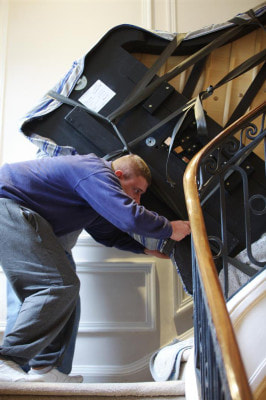
The Top 4 Advantages of Hiring Piano Movers in North London

5/8/2019

1 Comment

 
Picture
Piano movers in North London are available if you need to move a piano of any size from one address to another address. London is known for its artistic history and culture, which is why so many Londoners own pianos in the first place. You won’t find too many other cities in the world which have professional piano movers in them.
​
If you have a do-it-yourself mindset when it comes to moving, then you need to change that mindset where your piano is concerned. Perhaps you can get away with moving furniture and boxes on your own, but a piano is a different type of item. In fact, many professional movers won’t even move a piano because of its heavy weight and irregular shape. That is why you need to hire professional piano movers in North London who specialize in moving pianos for a living.

Failure to hire a piano mover could result in the permanent injury or death of you or someone else around your immediate area. It doesn’t matter if you live in a house or upper-story flat. Piano movers know the right and wrong ways to move a piano out of a residence so that no one gets hurt. It is not worth the risk to take a chance on doing it yourself.

To summarize this point in more detail, below are the top 4 advantages of hiring piano movers in North London.

1) Protect Your Piano’s Value

Do you have an acoustic piano, such as a grand piano? If so, these pianos can be worth hundreds or even thousands of dollars. They are even more valuable than most modern-day television sets and furniture pieces. Acoustic pianos are also very fragile and can break easily if they’re mishandled.

An amateur who tries moving an acoustic piano without any professional help will most likely fail miserably. They’ll end up damaging their piano, which may cause it to stop functioning and/or lose its value. Pianos have over 7,000 different components inside of them. If the internal sound mechanism is compromised, you’ll have to spend a lot of time and money re-tuning the piano. Also, any minor cracks, scratches, or dents will still decrease the value of your piano too.

On the other hand, professional piano movers in North London are trained to move pianos carefully with their special moving equipment, tools, and wrapping materials. Your piano will not have any superficial or severe damage inflicted upon it.

2) Avoid Accidents

An acoustic piano can weigh anywhere from 500 to 1,200 pounds. You could have three or four people attempting to lift the piano, and an accident could easily happen. All it would take is for one of the people to lose their strength, and the piano would fall onto them. With nearly 1,000 pounds of pressure impacting their body, you can be sure that serious injury or death would be the result of this accident.

Professional movers take special precautions to avoid such accidents. Their moving equipment keeps the piano stabilized and secured. This takes some pressure off the movers because they don’t need to exert too much of their own personal strength. As a result, accidents are far less likely to occur.

3) Great for Flat Residents

Even if you could gather a group of strong men to lift your piano, they would never be able to carry it down multiple flights of stairs. Anyone trying to move a piano from an upper story flat will have no choice but to request the assistance of a professional piano mover. Instead of carrying the piano, a professional will use a crane to lift the piano outside through the window. This is actually a safer way of moving the piano than taking it down the stairs. Since civilians like yourself cannot legally operate a crane, only a certified crane operator can do it. This service is included with your piano moving job.

4) Piano Transportation

After piano movers get your piano out of your home, the next step they take is transporting your piano to its destination. In other words, piano transport in London is included with their moving services. If you were to move your own piano out of your house, would you be able to load it safely onto the back of a truck and drive it to its proper destination? Probably not.
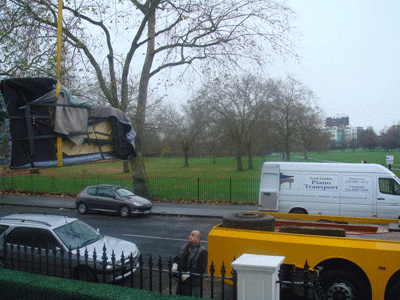
1 Comment

What to Expect from a Piano Removal Company in the UK

18/6/2019

0 Comments

 
Picture
​Do you ever wonder how pianos are removed from houses or upper story flats? When people who own pianos need to move to a new home, they must hire a piano removal company to move their pianos for them. Ordinary moving companies are not usually equipped to move such delicate and heavy possessions like pianos. You certainly can’t fit a piano into a box or crate, especially if it is a big acoustic piano that weighs several hundreds of pounds. On top of that, the irregular shape of a piano makes it even more challenging to move it.

A piano removal company specializes in moving acoustic pianos. Of course, an electronic piano wouldn’t be a problem to move because they don’t even weigh a hundred pounds. They’re also not that big and bulky either, so anyone can really move them. But acoustic pianos are different because of their enormous size and shape. Professional movers must be careful in the way they wrap, lift, and move these pianos. Otherwise, they run the risk of inadvertently damaging or scuffing the piano.

Piano transport in the UK is a lot tougher than it looks. In situations where the piano is on an upper floor, the movers won’t even bother trying to carry it down the stairs. Instead, they’ll use a crane to remove the piano from the upper floor window. This might sound like a scary concept, but it is actually the safest way to remove a heavy piano from such a high place. The crane is stable and will not drop the piano under any circumstances.

If the piano is on a bottom floor area, then the movers will wrap it up securely and then wheel it out. Once the piano is outside, the movers will load the piano onto their moving truck and transport it to its final destination. This could be your new house or flat or a storage unit somewhere. Most of these piano removal companies will offer piano storages in London too. These are special storage services reserved just for pianos. This is a better way to store a piano than using a traditional storage locker, so you might want to consider using it if piano storage is what you need.
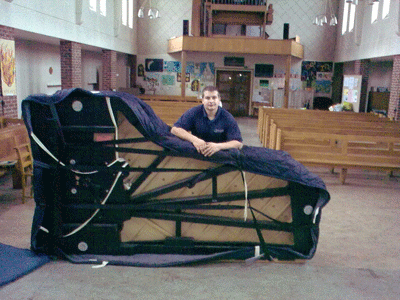

Submit
0 Comments

Should I go for cheap piano removals?

18/6/2019

0 Comments

 
Picture

​Are you looking for a piano removal company in the United Kingdom which does cheap piano removals? Are you wondering whether you should be looking for cheap ones versus expensive ones? After all, people often associated the word “cheap” with being of lower quality. However, you really need to judge a piano removal company by their reputation more than anything else. And thanks to the internet age, it is easier than ever to verify the credentials of a piano removal company. 
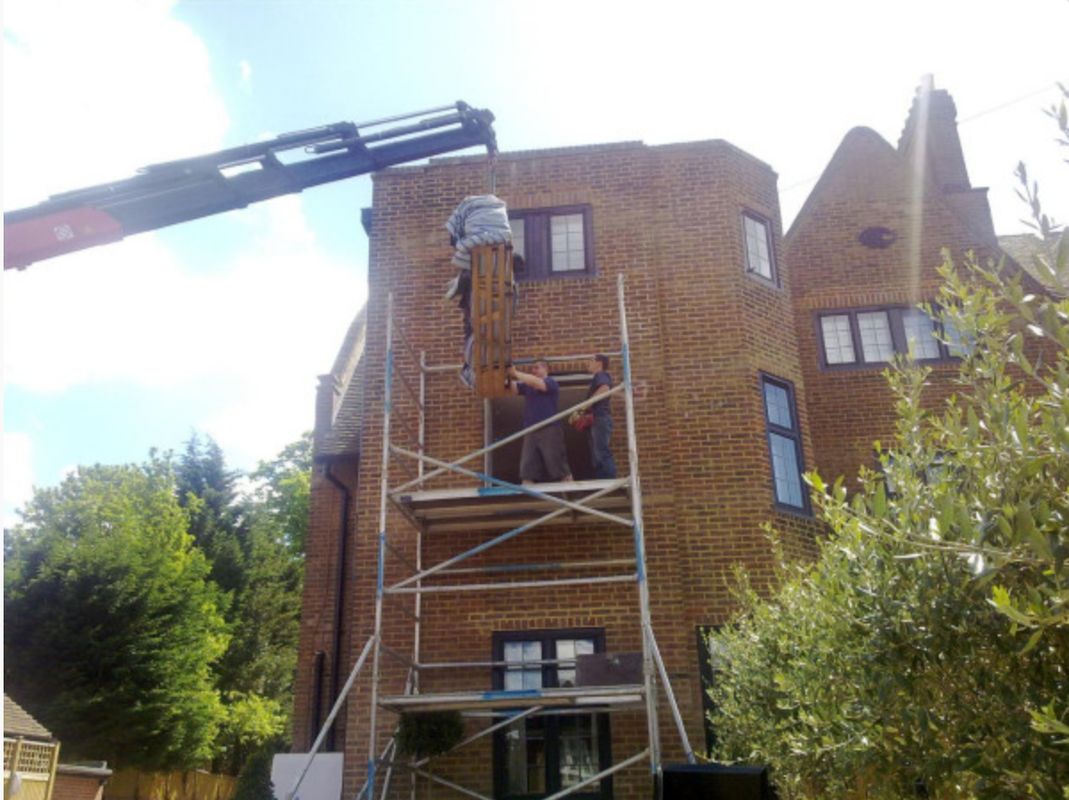
It is okay to choose a company that performs cheap piano removals if they have the proper tools and equipment to move your particular type of piano. For instance, a classical grand piano may weigh up to 800 pounds while a lower quality acoustic piano may weigh only a few hundred pounds, especially if it was made recently. Therefore, you may not have a problem trusting a cheaper piano removal company to move your acoustic piano if it weighs a few hundred pounds only. 

On the other hand, a classical grand piano that is hundreds of years old could be worth a lot of money. The piano movers in London that you choose need to respect such a piano and ensure that nothing bad happens to it. They must implement the proper safety mechanisms to ensure your piano does not get scratched, scarred, dented, or harmed in any way. Otherwise, it could impact the value of the piano severely. 

For this reason, the first thing you should ask any piano removal company is if their piano removals in London include grand piano transportation. If the company offers any type of insurance policy on their services, then that is even better. Older grand pianos have become collector’s items, so you’ll want to be compensated if the piano transport in the UK doesn’t go well. 

Overall, any professional piano removal company will know how to remove a grand piano from a house or flat without risking any harm to it. Even if you come across one service provider which has lower prices, they might still be good at doing their job. Just verify their reputation by doing a Google search of their name and read their customer reviews. This will tell you everything you’ll need to know about the quality of their work.

0 Comments

Hire the Professional Piano Movers

9/5/2019

0 Comments

 
Picture
All of our employees are trained to a high standard and are physically fit enough to move your prized piano safely and securely. We use state of the art, tried and tested equipment to get the job done properly.
Here’s how you can tell:
  • When we arrive we’ll take pictures and make a list of damaged items
  • We’ll wrap the piano and all of its parts prior to transport
  • We even have an enhanced wrapping service for those extra-long journeys; we’re expert at keeping you piano safe and damage free
When it’s time for the removal itself we will ensure there are a minimum of two highly train operatives on site and if your piano is 200 kilograms or more we will ensure there are four operatives there to assist.
On arrival we’ll use all of our experience along with specially design equipment such as lifting straps to make sure that your piano makes it to its next destination exactly as your left it, undamaged and immaculate.
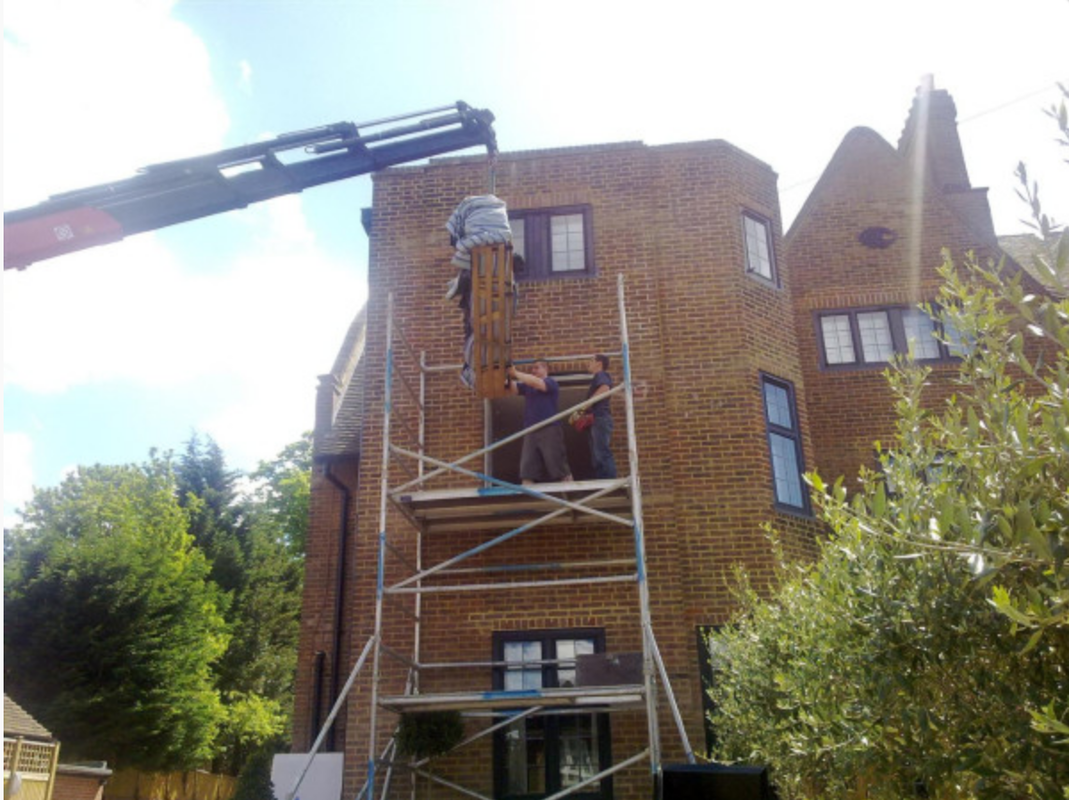
0 Comments

Cheap Piano Removals in London

9/5/2019

0 Comments

 
Picture
​Just because your prize piano cost you an arm and leg doesn’t mean that its transportation should too!
Now, we don’t advocate doing this on the cheap, you need trained piano movers to get your piano around London; true purveyors or of piano logistics if you will, but you shouldn’t need to re-mortgage your house to do this. That said…
There are two ways to move your prized piano and one of them is free…
You could do it yourself with some friends…but here’s why you shouldn’t!
It might seem like a really good idea, a cheap alternative, but just think about it for a moment. The average piano weighs between 200 and 450 kilograms and grand pianos go up to 900 kilograms (and that is the weight of a female giraffe just to put it into perspective!).
You need people with handling experience to move pianos of this size and weight. We’ve been called to jobs where you turn up and you think “why have you put your piano there?! And then you realise that it’s only there because three over-confident, under-experienced well-meaning friends have tried and failed to move it.
We’ve had stuck pianos, jammed pianos and broken pianos as a result of this, but we’ve also seen broken bones, pulled muscles, crushed body parts and injured backs as a result of not calling in the professionals; just don’t do it yourself!

0 Comments

Piano Movers North London

24/4/2019

0 Comments

 
If you are looking for affordable, yet quality piano movers in North London you are in luck; you’ve come to the right place!
We have many years of experience in moving pianos for the good people of North London; if you need to move a piano and you’re based in London, we’re the firm for you!
Piano removals in North London can be a tricky business, so choosing an experienced team of experts like us is extremely important; moving a piano successfully and safely is the name of our game.
We understand the great value of pianos; they are extremely expensive and often carry even greater sentimental value for their owners; as such our North London-based piano removals service prides itself on delivering your prized possession to its new destination safe and sound.
If you’re based in North London and are looking for a piano removal specialist to move your piano, why not give us a try today!
Picture
0 Comments

Cheap Piano Transport London

24/4/2019

0 Comments

 
We are a professional piano transport service serving London. We can transport any size or shape of piano regardless of whether it is a grand piano or an upright piano. If you need it to be moved in and around the London area we are the firm for you.
Our staff are professionally trained and specialists in their field; no corner is too tight, no set of stairs too awkward. We will take great care of your piano when transporting it; we’re London’s most reliable piano transport service.
edit.
Click here to editThe equipment that we use is state of the art; we use the best kit and the safest removal techniques to ensure that your piano arrives safe and sound wherever you are moving it to from London.
We provide free estimates for any piano transport in London; we can take your prized piano wherever it needs to go and keep it safe in the process.
.
0 Comments

Should I Hire a Cheap Piano Removal Professional?

29/3/2019

 
Picture
​Pianos are certainly not cheap possessions, especially if they’re acoustic pianos. If someone hires a piano removal company, they do so because they want piano movers in London who will care for their piano as it’s being transported. Any damage or scratches in which the piano sustains will decrease its value. If the damage is bad enough, it may also affect the piano’s functionality too. That is why extra care from professional piano movers in London is always sought after 

So, if you want to hire a piano removal company, should you just look for deals on cheap piano removals? Everyone wants to find a bargain, but is it worth settling for a cheap service provider that may do a less than satisfactory moving job? Well, there is no telling whether the cheap piano movers will do a good job or not. There are some piano movers who offer bargains because they’re trying to build name recognition. Others may just be hurting for business, so they’re offering discounts on their services. 

If you’re on a budget and you can only afford cheap piano removals, then try researching each piano removal company that you come across. Find out their prices, terms, and the locations they cover in London. More importantly, see if there are any customer reviews left for them on the internet. If you can find a cheap piano removal company with a lot of 4 or 5-star ratings, then you’re getting closer to finding a suitable piano moving company that you can trust.

Remember that not all piano removals in London are the same. Sometimes it may require the movers to use a crane to lift the piano out from your window if you live in an upper story flat. Not every piano removal company has this service, so it would be something to research if this applies to you. 

Overall, piano transport in the UK has never been easier. There are so many factors which influence the cost of the piano moving job. If you’re only moving the piano a short distance from first story buildings, then you’ll find the cheapest piano removals available. But if you’re bringing a grand piano from one side of London to the next, then you can expect a higher price. Just ask for free estimates first.

Should I Hire a Piano Removal Company?

29/3/2019

 
Picture
​The piano is a special possession for a lot of different reasons. Not only is it an instrument to play music on, but it can also be something personal to you and your family. It is a decoration and work of art for any room in your home. Now you may choose an electronic piano, but those don’t have the natural tone and uniqueness of an acoustic piano. Sure, an acoustic piano is heavier and more expensive, but it is worth keeping if you’re a true piano lover.

​
Of course, a problem will arise when you must move from your current home to a new home. If you own a grand piano or any type of acoustic piano, you’ll need to move a massive 400 to 800-pound item out of your house or flat. This is not recommended to do alone or even with one other person because you’re both not professional piano movers. It doesn’t matter if you live in a house or flat because you run the risk of damaging your piano either way.

Therefore, should you hire a piano removal company? The answer is yes. There are dozens of piano movers in London who specialize in moving pianos for Londoners. Some citizens may need cheap piano removals where they have their piano transported in the UK to a new residence. Others may need some type of piano storage in London because they’re in the process of moving but their new place isn’t ready yet. Whatever type of situation you need, a professional piano removal company can help. They provide moving and storage services to those who need them.

When these professional piano movers are in the process of moving your piano, they will take extra special care on the job to ensure nothing gets damaged. Your piano will be in the same condition it was in when it left your original residence. This is not something that can be guaranteed with traditional movers because they’re not skilled at moving pianos. This is a special kind of skill that requires moving experts who have experience with moving pianos.

Why are Piano Transports in London Good?

28/2/2019

1 Comment

 
Do you need to find piano transports in London? You probably don’t realize this, but London has several options for removing pianos from properties and relocating them to new properties around the city. Several Londoners own pianos because this instrument has been a part of English culture for centuries. Some Londoners own the classic grand pianos, while others own lighter variations of it. Either way, these pianos can weigh hundreds of pounds. There is no way an ordinary person and their buddy are going to move their piano. This goes double for anyone who lives in an upper floor flat building.

Your options for removing pianos depend on which piano removal company you hire. Piano transport in the UK is a thriving business, so you have plenty of choices to pick from. You can easily look up these companies online to find the best one. Each one sets their own unique removal rates, but you can generally find cheap piano removals if you look hard enough. Of course, the difficulty in removing and transporting your piano plays a huge factor in the estimated price you will be given for the job.

The people who need piano removals in London are usually those who are moving into a new flat or house. They need a professional mover to take their piano out of their old home and bring it to their new home. If an upper floor flat is involved, then the piano mover needs to use a crane to remove the piano through the window. It is a very technical process and a novice certainly doesn’t possess the skills or credentials to do such a thing. A professional piano removal company must be the one to do it.

And if you’re not ready to put the piano in your new home yet, you can always look for piano storages in London and put it in one. It’s better to use a specialized storage facility that is designed to store pianos. Don’t use a standard storage garage because they tend to be dirty and unsafe. Ask your piano movers if they can recommend some good piano storages in London. In many cases, they will offer storage services too. This may give you a good deal on their services if you hire them to both move your piano and store it for you. Then when you’re ready to move the piano to its new home, they will take it out of storage and complete the job.
1 Comment

Do Cheap Piano Removals Exist?

28/2/2019

0 Comments

 
You may be wondering if cheap piano removals exist? That is a good question because a lot of residents in London have big heavy pianos to move to new locations. Grand pianos are by far the biggest and heaviest pianos in existence. Although they come in different sizes too, you can expect a grand piano to weigh anywhere between 300 and 800 pounds on average. This is heavier than even the classic CRT televisions that people used to own. There is no way that any layperson can lift a grand piano out of their apartment or house, even if they have someone trying to help them. Instead, it requires a professional piano mover who has the right equipment for the job.

Okay, now getting back to the question. Piano movers in London charge different rates. You won’t find any piano removal company that is going to have a list of fixed prices on their website. All they can provide you with are estimates because each piano moving job is different. The factors which determine the final price are the location of the piano in London, whether it is on an upper or lower floor, the type and size of the piano, and the location where the piano will be transported. Once all this information is received, the movers can give you a more accurate estimate regarding the removal costs.

Therefore, cheap piano removals do exist under the right circumstances. For instance, if you have a piano that weighs a few hundred pounds and it’s inside of a house on the first floor, it won’t cost that much to move the piano to a new location. That is especially true if the new location is in the same neighborhood or vicinity as the current location. Whatever makes the movers’ job easier will make the price cheaper. Of course, you cannot help this sometimes because you may live in an upper floor flat or you may be moving to a place that is very far away. Either of these will increase the cost.

When researching piano movers in London, try to look for a piano removal company that has a lot of positive reviews on the internet. If you go to a search engine like Google and type in the phrase “London piano removal company reviews,” you should find plenty of review listings in your search results. If not, try modifying the search term a little bit until you find the company and reviews that you’re looking for. The piano removal company which has the best reviews (4 to 5-star ratings) is worth trying out.
0 Comments

Need to Move a Piano? Use a Piano Removal Company in London

16/1/2019

1 Comment


You might think it is uncommon for somebody to request the services of a piano removal company. However, there are actually a lot of Londoners who own pianos in their houses and flats. These are not those modern midi controller piano keyboards that work on electricity and weigh 20 pounds. Londoners are a bit more traditional than that because many of them own acoustic pianos. In some cases, these are grand pianos that weigh close to one thousand pounds. You wouldn’t be able to just lift these pianos out of your home as if you’re moving furniture either. The job requires a team of professional piano movers in London who do this for a living.
A piano removal company is an asset when it comes time to move your big piano. It is even more of an asset if your piano is located on the upper floor of a building.  The piano movers are not just going to roll the piano down the stairs. If they were to put it on an elevator, that would be way too risky because elevators have a maximum weight capacity of about one to two thousand pounds. But even if it had a larger capacity, the piano likely wouldn’t fit inside of a standard elevator anyway. Therefore, the only solution, in this case, would be to lift the piano out through the window.
Since you likely don’t own a large crane or have the experience to operate it, then you will need professional piano movers in London to operate it for you. They will use the crane to remove the piano from your upper floor flat and lift it out the window. Once it is lowered to the ground area, it will be placed on a moving truck and transported to your requested destination. If you’re moving into a new flat, then a crane will be used again to lift the piano up, move it through the open window, and place it down inside the flat.
You’re probably curious about the affordability of a piano removal company. The price is determined by how far the piano movers need to travel with the piano and how complicated it is to remove the piano from your home. Cheap piano removals are possible if the piano is in a house and you’re simply moving it to another house a few blocks away. But if you’re moving from one flat to another flat across the city, then you can expect to pay a bigger price for the service. It is still worth it if you care about your piano.

1 Comment

Are there any services for cheap piano removals?

5/12/2018

0 Comments

 
There are more piano movers in London than probably anywhere else. After all, London is a city with a rich history of musical arts and theater. It is a tradition for many Londoners to grow up learning how to play the piano. In fact, anyone raised in London probably has a family member who has a great big old grand piano in their living room. It is a very special piano which dates back hundreds of years. If you were fortunate enough to inherit this piano or have any kind of traditional piano, then you’ll want to ensure it stays safe whenever you need to move it somewhere else.

Of course, everyone is looking to save money wherever they can. Cheap piano removals are frequently requested by people who have large pianos to move or relocate in London. But when you consider piano logistics in London by getting it from Point A to Point B, you cannot expect to find a bargain all the time. The cost of piano removals in London is usually factored in by the weight and size of the piano and the destination where it is going.

London is a big city with many neighborhoods, suburbs, and other areas. Just because you’re relocating a piano to a different neighborhood in London, that doesn’t mean the piano removal and relocation costs are going to be cheap. Between the traffic and the mileage in transporting a large piano, those factors will be included in the price. That’s not to say that it will be terribly expensive, but you cannot expect to go bargain hunting too much when it comes to any kind of piano transport in the UK.

North London Piano Transports does not necessarily have cheap piano removals, but they have affordable piano removals and relocation services. Their prices are strictly determined by the size, type, and destination of the piano. Also, if you live on an upper floor flat which has a piano to be moved, then the use of a crane will add to the removal costs as well. ​

In the end, you need to think of piano removals as an investment. Sure, there are probably some companies that advertise cheap piano removal services, but you should not trust them. Otherwise, your piano could end up damaged or scuffed along the way. If you truly care about protecting the quality and integrity of your classic piano, then you will never risk having it moved by a team of amateurs. North London Piano Transports contains the most qualified piano movers in the UK. Go with their services and you will not be disappointed.
0 Comments

Should I hire a piano removal company?

5/12/2018

0 Comments

 
A piano removal company specializes in the service of removing pianos from people’s properties. These could be small electric pianos or large grand pianos that weigh thousands of pounds. This is clearly not a job that any layperson can handle because of the risks involved. Just imagine owning a grand piano in a flat on the fifth floor of a building. You won’t be able to just roll that piano down the stairs or wheel it onto an elevator. After all, elevators have their own weight capacity too. Not only will a grand piano exceed that capacity, but it will also be too bulky to fit onto an elevator. So, how do you remove the piano then?
Well, an experienced piano removal company like North London Piano Transports has the commercial vehicles and equipment needed to remove such large pianos from a flat. For instance, when it comes to removing the piano from an upper flat, a crane and hoist will be used. In other words, the piano will be lifted out from the window of the flat using a crane from the ground. This is really the only way in which such a job could be done in the first place. A layperson is not authorized to operate a crane. It requires a special license and training that only a professional company like North London Piano Transports can offer.

Therefore, you should definitely hire a piano removal company if you cannot physically lift and carry your piano out of your home. Such a company has the best piano movers in London, so you are in good hands. Depending on the destination of the piano, you can probably find options for some cheap piano removals. For instance, if you’re only relocating the piano a short distance away from where it originally was located, then it will not be as much money as it would be if you were relocating it outside of the city.

In either case, it is still better to have professional piano removals in London because you simply cannot do this job yourself. Even if you have a few other people who you think could help you move the piano, do not attempt to try. Your piano is a big investment and you don’t want to run the risk of damaging it. So many people try to find the cheap way out by moving their pianos themselves. This usually has drastic consequences that ruin people’s pianos and possibly even the property of other people along the way.

So, always stick with professional piano movers in London because they will keep your property and everyone else’s property safe.
0 Comments

Piano Storage in London

19/11/2018

2 Comments

 
Do you need to store your piano somewhere safe and secure? When you hire a piano removal company to relocate your piano, they may also offer piano storage in London too. This is a service where the movers will transport your piano to a secured facility for a temporary time. For instance, let’s say you need to move out of your current home, but you don’t have another home lined up yet. What are you going to do with your piano in the meantime? The only thing you could do is have it professionally stored away until you’re ready to move into your new home. Then the piano movers in London will bring your piano to your new place.

You might wonder why someone would go through all the trouble to move and store a big piano. Why not just purchase a lightweight electronic piano and be done with it? Well, there is something classy and original about the sound of a grand piano. These sounds cannot exactly be duplicated on an electronic piano. For hundreds of years, pianists have used grand pianos because they are authentic and rely merely on keys, hammers, and strings to create the sounds you hear. If you are a true musician and pianist, then you will agree that piano storage is a worthy investment.

Be careful of cheap piano removal companies in London. Some service providers do not have the expertise or skills to move a grand piano. If you don’t choose the right piano removal company, they will likely damage your precious investment. What’s worse is they will make you sign contracts beforehand which take away their liability from an incident like this. Therefore, be sure to research the piano transport company first before hiring them.

Piano storage facilities will keep the piano in a locked unit which has air conditioning or heat available. You’ll never need to worry about the piano forming mould or getting deteriorated because of humidity and heat. Alternatively, if investing in the relocation of a piano is too much for you, then you can always resort to piano rentals in London. This is where you hire piano movers in London to bring a piano to your residence for a temporary time period.

When you are done with the piano, it is then taken away. The benefit here is that you don’t need to purchase the piano, but rather pay a small rent price to keep it for a while. This is suitable for people who might be throwing a party or hosting an event at their house and simply wishes to impress their clients for the evening. If you use your imagination, you can probably think of many reasons why you should store your grand piano.
2 Comments

Piano Movers in London

14/10/2015

 
new website the north london piano transport
Piano Movers in London are more common than you think. There are literally thousands of people in London who own pianos of some kind. We’re not talking about the electric piano keyboards that weigh 10 pounds. No, we’re talking about the classic grand size pianos that weigh hundreds or even thousands of pounds. These are certainly not pianos that you can just carry around with two arms. Heck, even two strong movers wouldn’t be able to lift a grand piano by themselves. They would need the proper equipment to lift it for them.

If your piano is on the first floor of a flat or house, then moving it will be a relatively simple process. The movers will likely use a giant trolley to wheel the piano out of the home. On the other hand, if the piano is on the upper floor of a home or flat building, it cannot just be wheeled out. If there is an elevator in the building, the piano is likely not going to fit in there. And even if it could fit in there, the elevator cannot support the heavy weight of the piano. Remember that elevators have a maximum weight capacity too. Some pianos might be too heavy for them, depending on the elevator.

Therefore, your only option is to hire a piano removal company to come and professionally move the piano out for you. For the upper floor piano removals in London, professionals will use a crane to remove the piano. They will actually attach a crane to the piano through an open upper floor window. The crane will then lift the piano out the window and place it onto the ground below. From there, the piano can be trolleyed into the back of a moving truck.

As you can see, piano movers in London have a difficult job. But they are the professionals who do this for a living. Once the piano removal company has your piano, they can move it to any location that you want. Piano transport in the UK has never been easier. After the piano arrives at its destination place, the movers will work to put the piano inside your new home wherever you want. If this means hoisting the piano back up into the air using a crane, then that will be done. ​

You can rest assured that your piano will arrive in the same condition that it was in before. The piano logistics in London are specially coordinated down to every tiny detail. This ensures that nothing goes wrong or gets damaged. Trust the piano movers because they are the professionals.
it.

    Author

    The North Piano Transport

    Archives

    February 2026
    April 2022
    March 2022
    February 2022
    August 2019
    June 2019
    May 2019
    April 2019
    March 2019
    February 2019
    January 2019
    December 2018
    November 2018
    October 2015

    Categories

    All
    Buying A Piano
    Full Piano Cost Universe
    Learning To Play Piano
    Piano Acoustics & Sound
    Piano And The Home
    Piano Brands & Models
    Piano Care & Maintenance
    Piano Disposal & Removal
    Piano History & Culture
    Piano & Modern Technology
    Piano Moving
    Piano Moving & Transport
    Piano Servicing & Repair
    Piano Storage
    Piano Transport London
    Piano Tuning
    Schools & Music Institutions

    RSS Feed

Information

  • Get Instant Quote
  • Pricing Guide
  • Our Services
  • Customer Reviews
  • Photo Gallery
  • Why Choose Us
  • Contact Us

Services

  • Piano Movers London
  • Piano Transport London
  • Piano Removals London
  • Affordable Piano Movers
  • Piano Tuning London
  • Upright vs Grand Moving
  • All London Areas

Helpful Guides

  • 50 Piano Moving Questions
  • Piano Moving Costs London
  • How to Prepare Your Piano
  • Moving a Piano Upstairs
  • Free Moving Checklist PDF
  • Get Rid of Unwanted Piano
  • Staircase Piano Moving

London Areas

  • North London
  • Barnet
  • Enfield
  • South London
  • East London
  • West London
  • All 32 Boroughs →

More Areas

  • Kensington & Chelsea
  • Westminster
  • Islington
  • Camden
  • Haringey
  • Hackney
  • Tower Hamlets

South & East

  • Southwark
  • Lambeth
  • Wandsworth
  • Lewisham
  • Greenwich
  • Croydon
  • Bromley

West & Outer

  • Ealing
  • Hammersmith & Fulham
  • Richmond
  • Hounslow
  • Brent
  • Harrow
  • Kingston

Recent Articles

  • Complete Moving Guide 2026
  • Piano Moving Costs 2026
  • Never Move Piano Yourself
  • Avoid Piano Damage
  • 5 Tips for Moving
  • Piano Storage London
  • All Articles →

Contact Us

Piano Service North London

176 Millicent Grove
London N13 6HS

Tel: 020 3441 9463

Email:
[email protected]

Hours:
Mon–Fri: 08:30–18:00
Sat: 08:30–15:00
Sun: Closed

Also visit:
pianomovers.co.uk

Piano Service North London — Trading as THE NORTH LONDON PIANO TRANSPORT 2 LTD
Company No. 06405076  |  Established 2007  |  Fully Insured · £5M Public Liability
176 Millicent Grove, London N13 6HS  |  020 3441 9463

Follow Us

FB TW YT IG

Cookies Policy  |  Sitemap  |  Partners

© 2007–2026 Piano Service North London. All rights reserved.

Photo from Ninara
  • Home
  • Services
    • Piano Movers North London
    • Piano Movers London
    • Piano Transport London
    • Piano Removals London
    • Piano Movers West London
    • Piano Movers South London
    • Piano Movers East London
    • Piano Moving Questions
  • Prices
  • Areas
    • City of London
    • Piano Movers ​City of Westminster
    • Piano Movers Kensington and Chelsea
    • Piano Movers in Hammersmith and Fulham
    • Piano Movers Islington London
    • Piano Movers in Wandsworth
    • Piano Movers in Lambeth
    • Piano Movers in Southwark
    • Piano Movers in Tower Hamlets
    • Piano Movers in Hackney
    • Piano Movers in Camden
    • Piano Movers in Brent
    • Piano Movers in Ealing
    • Piano Movers in Hounslow
    • Piano Movers in Richmond upon Thames
    • Piano Movers in Kingston
    • Piano Movers in ​Merton
    • Piano Movers Sutton
    • Piano Movers in ​​Croydon
    • Piano Movers in ​​Bromley
    • Piano Movers in ​Lewisham
    • Piano Movers in ​Greenwich
    • Piano Movers in ​Havering
    • Piano Movers in ​Bexley
    • Piano Movers in ​Barking and Dagenham
    • Piano Movers in ​Redbridge
    • Piano Movers in ​​Newham
    • Piano Movers in ​​​Waltham Forest
    • Piano Movers in ​​ ​Haringey
    • Piano Movers in ​​Enfield
    • Piano Movers in ​​​Barnet
    • Piano Movers in ​​Harrow
  • Order
  • Photos
  • Contact Us
  • Blog
  • Link
  • Reviews